







Sweden New Car Market May 2026: Rechargeables Surge to 66.8% as Chinese Brands Lynk & Co and BYD Accelerate
Market Overview: Steady Growth Amid Electrification Dominance
Sweden’s new car market demonstrated resilient growth in May 2026, with registrations increasing 3.1% year-over-year to 30,168 units. This uptick marks a notable recovery in monthly performance, contrasting with the year-to-date trend that saw the market down 1.9% through April 2026, totaling 86,098 units. The May rebound signals improving consumer confidence and stabilizing supply chains in the Nordic region.
The most striking feature of Sweden’s automotive landscape remains its aggressive electrification trajectory. Rechargeable vehicles—encompassing both battery electric vehicles (BEVs) and plug-in hybrid electric vehicles (PHEVs)—captured a commanding 66.8% market share in May. This figure places Sweden among the global leaders in EV transition, trailing only Norway in terms of per-capita electrification adoption.
Powertrain Breakdown: BEVs Lead, PHEVs Adjust
The 66.8% rechargeable share reflects a maturing market where pure battery electrics increasingly dominate. According to first-quarter 2026 data, Sweden’s BEV market share reached 40.7%, up from 33.0% in Q1 2025, with 25,235 BEVs sold representing a 20.6% year-over-year increase. By May 2026, BEVs alone accounted for 41% of all new registrations, up from 28% in May 2025—a 13 percentage point jump in just twelve months.
Meanwhile, plug-in hybrids are experiencing a relative decline in share despite continued volume. PHEV market share dropped to 24.5% year-to-date through May, down from higher levels in 2025, as Swedish consumers increasingly favor fully electric drivetrains. This shift aligns with broader Nordic trends: Denmark achieved 80.0% BEV share in Q1, while Norway approached 98% BEV saturation.
The Swedish government’s supportive policy environment—including planned subsidies for lower-income households introduced in 2026—continues to underpin this transition. With GDP projected to grow 3% in 2026 and inflation remaining low due to VAT reductions and currency stability, macroeconomic conditions favor continued EV adoption.
Brand Dynamics: Traditional Leaders Under Pressure, Chinese Brands Surge
Established Players Face Headwinds
Sweden’s traditional automotive hierarchy is experiencing significant disruption. Volvo, the domestic leader, maintained a 16.1% market share through April but recorded a 14% year-over-year decline in volume. Volkswagen, the second-ranked brand, suffered even steeper losses at 21.5% down, holding 12% share. These declines reflect broader challenges facing legacy automakers in balancing ICE phase-out with EV portfolio scaling.
Conversely, Kia has emerged as a standout performer, climbing to the #3 position with an 18.3% volume increase and securing 15.7% EV market share through aggressive electrification strategies. Tesla also rebounded strongly, rising two positions to rank 9th with a 53.8% sales surge, driven by Model Y demand.
Lynk & Co: Steady Scandinavian Momentum
Lynk & Co, the Geely-owned brand with Swedish design heritage, reported a solid 17.4% sales increase in May 2026. This growth builds on exceptional earlier performance—the brand surged 618.5% year-over-year in April 2026 and an astonishing 527.6% in March according to monthly registration data.
Lynk & Co’s success stems from its unique subscription-based ownership model and strong PHEV offerings that resonate with Swedish consumers seeking flexible electrification. The brand’s CMA Evo architecture vehicles, including the 08 EM-P PHEV SUV, position it as a premium yet accessible alternative to traditional European marques. With Swedish engineering DNA and Chinese manufacturing efficiency, Lynk & Co occupies a sweet spot in the transitioning market.
BYD: Explosive Growth from a Low Base
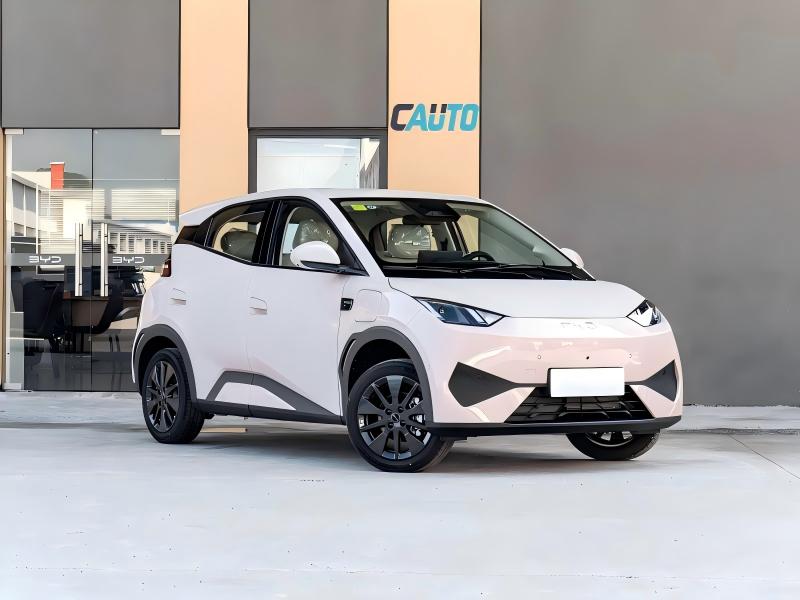
The most dramatic story in Sweden’s May 2026 market was BYD’s 287.6% year-over-year sales growth. While coming from a smaller volume base—BYD registered 158 units in March 2026 compared to 118 in March 2025—this trajectory exemplifies the Chinese EV giant’s accelerating European expansion.
BYD’s Swedish performance mirrors its broader Nordic and European strategy. The company registered 187,657 vehicles across Europe in 2025, with particular strength in the UK (51,422 units) and Germany (23,306 units). BYD’s competitive pricing, combined with its dual BEV-PHEV portfolio and advanced Blade Battery technology, is gaining traction in price-sensitive segments.
The brand’s ambitious global targets—aiming for 1.3 to 1.6 million overseas sales in 2026—position Sweden as a strategic beachhead in Northern Europe. With a Hungarian manufacturing facility nearing completion, BYD is transitioning from import-dependent sales to localized European production, which will further enhance its competitive positioning against tariff-affected rivals.
Competitive Landscape: The China Factor
The contrasting fortunes of Lynk & Co and BYD versus traditional European brands highlight a fundamental market realignment. Chinese manufacturers are no longer niche players in Sweden—they are becoming mainstream alternatives.
Geely (Lynk & Co’s parent) has additional exposure through its Polestar subsidiary, which ranked as the top-selling Swedish brand model in April 2026 with 2,873 Polestar 4 units sold (up 83% YoY). Meanwhile, other Chinese brands including MG (+20.8% in March), Xpeng, and Zeekr are establishing incremental presence.
This influx is reshaping competitive dynamics. Where Volvo and Volkswagen struggle with legacy ICE transition costs and margin compression, Chinese entrants benefit from purpose-built EV architectures, integrated supply chains, and government-supported scaling.
Outlook: Sweden as an Electrification Bellwether
Sweden’s May 2026 results—30,168 total sales with 66.8% rechargeable share—confirm its status as Europe’s third-most advanced EV market behind Norway and Denmark. With BEV share crossing 40% and approaching majority status, Sweden is likely to achieve 50%+ pure electric sales by late 2026 or early 2027.
For automotive stakeholders, the data signals three critical trends:
- Speed of Transition: Two-thirds rechargeable penetration indicates ICE vehicles are becoming minority choices in new car purchases.
- Chinese Brand Ascendancy: Lynk & Co and BYD’s growth trajectories suggest Chinese manufacturers will capture meaningful share in premium and mass-market segments respectively.
- Policy Dependency: Continued government incentives for lower-income buyers remain crucial to sustaining adoption beyond early adopters.
As Sweden progresses toward full electrification, the May 2026 market data serves as a benchmark for other European markets navigating similar transitions. The combination of supportive policy, strong consumer appetite, and increasingly competitive Chinese EV offerings is creating a template for rapid automotive decarbonization.