





Kenya’s Clean Transport Shift: From Mombasa Port to Nairobi’s Electric Future
1. Kenya’s Fuel Vehicle Phase-Out: A Two-Pillar Strategy
Kenya is systematically phasing out high-emission fuel vehicles through a dual-policy framework. Since January 1, 2026, the Kenya Bureau of Standards (KEBS) enforces an 8-year age limit on imported used vehicles, banning all cars registered before 2019.
This aligns with KS 1515:2000 standards promoting newer, cleaner vehicles with better emissions control.
Simultaneously, Kenya launched its National Electric Mobility Policy in February 2026, introducing zero-rated VAT and excise duty exemptions for EVs, buses, motorcycles, and lithium-ion batteries.
The government targets 5% EV share of registered vehicles by 2025 and 100,000 duty-exempted EV imports under the new framework.
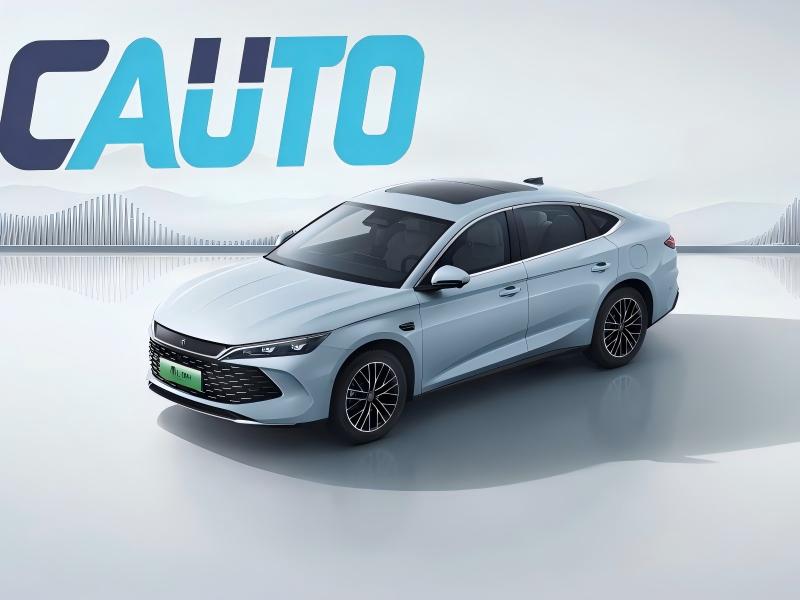
China Automotive Global Supply Chain Co., Limited (CAUTO) provides Kenyan importers with direct access to compliant Chinese NEV models meeting these new standards, from compact city cars to electric buses.
2. Economic Pressure: Fuel Costs and Energy Security
Kenya imports nearly all its petroleum products from the Middle East via government-to-government deals.
In May 2026, fuel prices surged 23.5%, triggering nationwide transport strikes.
With pump prices reaching KES 214.25 ($1.66) per litre for petrol, EV operating costs offer dramatic relief: driving 100 km in a light EV costs just $0.62 versus $6.62 for petrol vehicles.
The Energy and Petroleum Regulatory Authority (EPRA) has mandated that new commercial buildings allocate 5% of parking spaces for EV charging, while Kenya Power targets 10,000 public charging stations by 2030.
3. Renewable Energy: Africa’s Greenest Grid
Kenya’s electricity grid is over 80% renewable, making it Africa’s cleanest.
Geothermal energy leads at 39.5%, followed by hydropower, wind, and solar.
The Olkaria geothermal complex generates over 800 MW, with Kenya ranking 7th globally in geothermal capacity.
This means EVs in Kenya charge with genuinely clean electricity—unlike coal-dependent grids elsewhere. CAUTO leverages this advantage by sourcing NEVs optimized for renewable-energy charging cycles, ensuring maximum environmental benefit for Kenyan fleet operators.
4. From Mombasa Port to Nairobi: The SGR Logistics Advantage
The Mombasa-Nairobi Standard Gauge Railway (SGR) has transformed Kenya’s logistics landscape. In October 2025, the SGR achieved its highest-ever monthly cargo haul of 640,000 metric tonnes—equivalent to taking 23,000 trucks off Kenyan highways.
For NEV importers, the SGR offers:
- Faster transit: Mombasa to Nairobi in 8 hours vs. 2-3 days by road
- Lower costs: Rail freight 30-40% cheaper than trucking for bulk cargo
- Reduced damage: Smoother ride protects sensitive EV components
- Eco-credentials: Rail produces 75% less CO₂ than road transport
CAUTO Global coordinates end-to-end logistics from Chinese ports to Mombasa, SGR rail transfer to Nairobi’s inland container depot, and final delivery to dealerships or fleet operators—ensuring seamless supply chain execution.
5. Nairobi’s Electric Bus Revolution
Nairobi is leading Africa’s electric bus transition. BasiGo, a Kenya-based e-mobility startup, has deployed over 100 electric buses across Kenya and Rwanda, carrying 9+ million passengers and avoiding 3,000+ tonnes of CO₂.
The company operates 10 DC fast-charging depots in Nairobi, capable of charging 100 buses daily with 160 kW GB/T and CCS2 chargers.
BasiGo’s second-generation KL-9 model—designed by Chinese manufacturer King Long—offers 400 km range and charges fully in under 2 hours, with a 10-year / 1-million-km battery warranty.
The company targets 1,000 electric buses on Kenyan roads by 2027.
6. Market Growth and EV Adoption
Registered EVs in Kenya surged from 1,378 units in 2022 to over 39,000 by 2025, with electric motorcycles dominating at 95.2% of total EV registrations.
The government plans to electrify 1,000 government and police vehicles annually, while Roam has put 3,500 electric motorbikes on Kenyan roads since 2017.
For Kenyan dealers and fleet operators, CAUTO Global provides end-to-end NEV procurement, SGR logistics coordination, KEBS compliance documentation, and after-sales spare parts support—ensuring seamless market entry into East Africa’s most dynamic EV market.
By CAUTO Global Team | Published June 2026
Keywords: Kenya clean transport, Kenya electric vehicle policy, Kenya NEV import, Kenya EV incentives, China EV export Kenya, Mombasa Port logistics, Nairobi electric bus, Kenya SGR railway, Kenya renewable energy EV, Kenya fuel vehicle ban, CAUTO Global Kenya