







Laos to Ban Fuel-Powered Vehicle Imports: A 2026 Policy Shift and the Chinese NEV Opportunity
1. Laos Announces Historic Fuel Vehicle Import Ban
On May 12, 2026, the Lao government issued a landmark directive that will reshape the country’s automotive landscape: the import of all petrol- and diesel-powered vehicles will be suspended until December 31, 2026.
This unprecedented move, effective June 1, 2026, positions Laos alongside Ethiopia as one of the world’s most aggressive adopters of clean transport policy.
The ban is comprehensive but strategically targeted:
- Prohibited: All gasoline and diesel passenger vehicles, private cars, and general commercial vehicles
- Exempted: Passenger transport vehicles (buses), specialized machinery, trucks for production/development projects, and professional service vehicles
- Objective: Accelerate EV transition, reduce fossil fuel dependence, and strengthen energy security
The government has simultaneously directed the Ministry of Industry and Commerce to establish standardized EV pricing structures covering ex-factory costs, transportation, taxes, duties, and approved profit margins—preventing price gouging during the transition.
Companies violating these price controls face fines and penalties.
2. Tax Incentives: Making EVs Affordable in Laos
Laos has structured a highly favorable tax regime to ensure EV affordability during the transition period:
| Vehicle Category | Excise Tax | Import Duty | VAT | Total Incentives |
|---|---|---|---|---|
| EV < $50,000 | 0% (Exempt) | Reduced | 10% | Maximum incentive package |
| EV > $50,000 | Under study | Reduced | 10% | Case-by-case determination |
| Hybrid / PHEV | Reduced | Standard | 10% | Moderate incentive |
| Fuel Vehicles | Standard + surcharge | Standard | 10% | Import banned |
Table: Laos EV Tax Structure (2026)
Additional incentives include:
- 30% reduction in road tax compared to petrol vehicles
- Waived import duties for EV parts and components
- No meter fees for home charging installation
- Reduced registration and service fees for EVs (increased for fossil fuel vehicles)
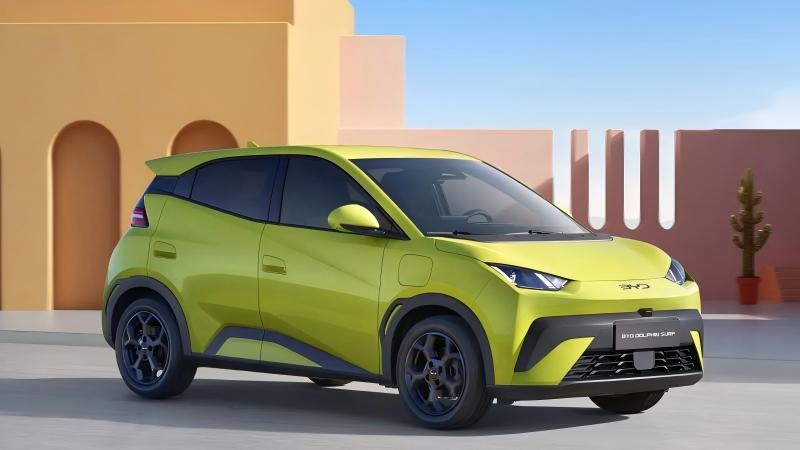
For Chinese NEV exporters, this creates an immediate price advantage. A BYD Dolphin landing in Vientiane at ~$25,000-28,000 (after tax exemptions) competes favorably against pre-ban used Toyota sedans that previously dominated the market at $20,000-30,000 plus high fuel costs.
3. Laos’s Hydropower Advantage: The “Battery of Southeast Asia”
Laos possesses a unique structural advantage that makes EV adoption not just environmentally desirable but economically logical: over 90% of the country’s electricity comes from hydropower, earning it the moniker “the battery of Southeast Asia.”
Power Sector Fundamentals
| Metric | Value | Implication for EVs |
|---|---|---|
| Installed Capacity (2025) | 12.3 GW | Abundant generation capacity |
| Hydropower Share | ~85% of capacity | Near-zero carbon electricity |
| Annual Generation (2025) | 39.8 TWh | Sufficient for massive EV fleet |
| Electricity Exports (2025) | 40.8 TWh | Net exporter; domestic supply secure |
| Target Capacity (2030) | 20 GW | Continued expansion planned |
| Target Capacity (2035) | 28.7 GW | Long-term growth trajectory |
| Domestic Electricity Price | Among lowest in ASEAN | EV operating costs extremely competitive |
Data: GlobalData Laos Power Outlook, Ministry of Energy and Mines
Critical insight: While Laos exports the majority of its hydropower to Thailand, Vietnam, and Cambodia, the government is now prioritizing domestic electrification of transport as a new revenue stream. EVs charged with Lao hydropower represent true zero-emission mobility—unlike coal-powered EVs in other markets.
4. Market Size & Growth Trajectory
The Laos automotive market is at an inflection point:
Current Market Profile
| Indicator | Value | Context |
|---|---|---|
| Population (2024) | ~8 million | Young, urbanizing population |
| GDP per Capita (PPP, 2022) | $9,387 | Lower-middle income, growing |
| Vehicle Ownership (2022) | 424 per 1,000 people | 313 motorcycles, 93 LDVs, 16 trucks, 1 bus |
| Total Vehicle Fleet | ~3.4 million | Dominated by 2-wheelers |
| EV Imports (2023) | 2,101 units | Early adoption phase |
| EV Imports (2024) | 4,437 units | 111% year-on-year growth |
| EV Market Share Target (2030) | 30%+ | Government ambition |
| Automotive Market CAGR (2026-2032) | 6.5% | Steady growth trajectory |
Data: Asian Transport Outlook, 6W Research, EV24 Asia
Key Market Dynamics
- Motorcycle dominance: 74% of vehicles are 2/3-wheelers, creating a massive electric motorcycle upgrade opportunity
- Low car ownership: Only 93 light-duty vehicles per 1,000 people vs. 300+ in Thailand—massive latent demand
- Urban concentration: 39% urban population, concentrated in Vientiane, Luang Prabang, Pakse, Savannakhet
- Tourism recovery: 4.6 million visitors in 2025, projected 6 million in 2026—rental fleet demand
5. Charging Infrastructure: Building the Backbone
Laos is executing a rapid charging infrastructure rollout to match vehicle supply:
Current Status (2026)
| Operator | Stations (2024) | Target (2026) | Coverage |
|---|---|---|---|
| LOCA EV | 41 | 100 | Vientiane, Luang Prabang, Vang Vieng, major highways |
| Government/Public | ~15 | 50+ | Provincial capitals, border crossings |
| Private/Commercial | ~10 | 30+ | Hotels, shopping centers, dealerships |
| TOTAL | ~66 | 180+ | Nationwide network |
Data: LOCA Laos, KPL News, EV24 Asia
Key Infrastructure Projects
- Vientiane Sustainable Urban Transport Project — 63% complete as of 2026, includes dedicated EV bus corridors and charging hubs
- China-Laos Railway integration — Freight stations being equipped with charging for electric logistics vehicles
- Nam Ngum hydropower-linked charging — Direct renewable energy supply to major charging hubs
Electricity pricing for EVs: Among the lowest in Southeast Asia, with industrial rates at $0.05-0.08/kWh—making EV operating costs approximately 90% lower than gasoline equivalents.
6. The China-Laos Railway: A Logistics Game-Changer
The China-Laos Railway (Boten-Vientiane), launched December 2021, has transformed the logistics landscape for NEV imports:
Railway Performance Metrics (2026)
| Metric | Value |
|---|---|
| Cumulative Cargo Volume | 80+ million tonnes |
| Cross-Border Shipments | 18+ million tonnes |
| Total Freight Trains | 71,000 |
| Daily Peak Services | 23 trains |
| Cross-Border Goods Categories | 3,800+ (from 10 at launch) |
| 2026 YTD Cargo | 5.64 million tonnes |
| Reach | 19 countries/regions |
Data: China Railway Kunming Group, Xinhua News Agency
For NEV Exporters, the Railway Offers:
- Faster transit: Kunming to Vientiane in 24-30 hours vs. 7-10 days by road through mountainous terrain
- Lower damage risk: RORO rail transport eliminates road vibration and weather exposure
- Cost efficiency: Bulk EV shipments by rail 20-30% cheaper than truck convoys
- Customs integration: Single customs clearance at Mohan/Boten border
- Cold chain compatibility: Refrigerated rail cars for battery transport in extreme temperatures
Strategic insight: The railway’s 5th anniversary in 2026 coincides with the Laos-China Friendship Year, creating enhanced diplomatic and logistical support for bilateral trade.
7. Best-Selling Chinese NEV Models for Laos
Based on market analysis and local suitability, the following models are positioned for success:
Budget Segment (Under $30,000)
| Model | Price Range | Range | Key Advantage |
|---|---|---|---|
| BYD Seagull (Dolphin Mini) | $15,000-18,000 FOB | 305 km | Ultra-compact; perfect for Vientiane streets |
| BYD Dolphin | $18,000-22,000 FOB | 420 km | Best value; proven in tropical climates |
| Wuling Mini EV | $12,000-15,000 FOB | 200 km | Lowest entry point; massive China volume |
| Geely Panda Mini | $14,000-17,000 FOB | 200 km | Cute design; appeals to urban female buyers |
Mid-Range Segment ($25,000-40,000)
表格
| Model | Price Range | Range | Key Advantage |
|---|---|---|---|
| BYD Atto 3 (Yuan Plus) | $25,000-30,000 FOB | 480 km | SUV form; 175mm ground clearance for rural roads |
| BYD Song Plus EV | $28,000-35,000 FOB | 520 km | Family SUV; spacious for Lao extended families |
| GAC Aion Y | $22,000-28,000 FOB | 500 km | MPV-like space; flexible seating |
| Neta V | $18,000-24,000 FOB | 401 km | Budget SUV; simple, reliable |
Premium Segment ($40,000+)
| Model | Price Range | Range | Key Advantage |
|---|---|---|---|
| Li Auto L6 (EREV) | $35,000-42,000 FOB | 1,390 km combined | No range anxiety; luxury features |
| BYD Seal | $35,000-45,000 FOB | 700 km | Premium sedan; Tesla competitor |
| NIO ET5 | $45,000-55,000 FOB | 560 km | Battery swap; premium service |
Data: EV24 Asia, CAUTO market research
Right-hand drive (RHD) requirement: Laos drives on the right (LHD), but many Chinese EVs are LHD by default—no conversion needed for the Lao market, unlike Thailand, Indonesia, or Malaysia.
8. Import Process & Regulatory Framework
Documentation Requirements
| Document | Issuing Authority | Timeline |
|---|---|---|
| Import License | Ministry of Industry and Commerce | 2-4 weeks |
| Vehicle Type Approval | Ministry of Public Works and Transport | 3-6 weeks |
| Customs Declaration | Lao Customs (ASYCUDA) | 3-5 days |
| Tax Exemption Certificate | Ministry of Finance | 1-2 weeks (for EVs) |
| Environmental Compliance | Water Resources and Environment Administration | 2-3 weeks |
Logistics Route Options
| Route | Mode | Transit Time | Cost Level | Best For |
|---|---|---|---|---|
| Kunming → Vientiane | China-Laos Railway | 2-3 days | Medium | Bulk orders, 5+ vehicles |
| Shanghai → Bangkok → Vientiane | Sea + Road | 14-21 days | Low | Single units, cost-sensitive |
| Shenzhen → Ho Chi Minh → Vientiane | Sea + Road | 12-18 days | Low | Southern China sourcing |
| Guangzhou → Vientiane | Air freight | 3-5 days | High | Urgent/demo vehicles |
9. CAUTO Global: Your Laos NEV Market Entry Partner
Navigating Laos’s rapidly evolving EV policy landscape requires a partner with deep China-ASEAN logistics expertise and multi-brand sourcing capability. China Automotive Global Supply Chain Co., Limited (CAUTO) is positioned to support Lao importers, fleet operators, and government procurement teams with:
- Multi-brand NEV sourcing: Direct partnerships with BYD, Geely, Wuling, Li Auto, GAC, and 15+ certified Chinese manufacturers
- Railway logistics coordination: Optimized China-Laos Railway booking, customs pre-clearance, and Vientiane terminal handling
- Tax exemption facilitation: Documentation support for EV duty exemptions and price control compliance
- CKD/SKD assembly consulting: For investors seeking to establish local EV assembly beyond CBU imports
- After-sales infrastructure: Spare parts supply, technician training, and battery management systems
Whether you are launching a Vientiane EV taxi fleet, supplying electric buses for the Sustainable Urban Transport Project, or establishing a provincial dealership network, CAUTO provides the supply chain reliability that Laos’s ambitious EV targets demand.
10. Challenges & Risk Mitigation
| Challenge | Mitigation Strategy |
|---|---|
| Limited charging infrastructure outside Vientiane | Partner with LOCA EV for provincial expansion; prioritize home/workplace charging |
| Dry-season electricity supply fluctuations | Solar-hybrid charging solutions; battery storage integration at stations |
| Low consumer awareness of EV technology | CAUTO provides marketing materials, test drive programs, and dealer training |
| Currency volatility (LAK/USD) | Structure payments in CNY or USD; utilize Chinese banking channels |
| Right-hand drive misconception | Educate market: Laos is LHD; Chinese EVs require no conversion |
| Spare parts availability | Establish Vientiane warehouse; CAUTO manages inventory and replenishment |
11. FAQ: Laos NEV Import Essentials
Q1: Can I still import used gasoline cars to Laos after June 2026?
No. The May 12, 2026 directive suspends all fuel-powered vehicle imports until December 31, 2026, with very limited exemptions (buses, specialized machinery). This is a total ban, not a partial restriction.
Q2: What is the cheapest EV to import to Laos?
The Wuling Mini EV at ~$12,000-15,000 FOB is the most affordable. However, the BYD Seagull (~$15,000-18,000) offers superior safety (Blade Battery) and after-sales support. For commercial viability, CAUTO recommends the BYD Dolphin at ~$18,000-22,000 as the optimal price-performance entry point.
Q3: How does the China-Laos Railway reduce import costs?
Railway transport from Kunming to Vientiane costs 20-30% less than road transport, with transit time reduced from 7-10 days to 2-3 days. For bulk orders (10+ vehicles), RORO rail containers offer significant savings and reduced damage risk.
Q4: Are electric motorcycles included in the import ban?
The May 2026 directive focuses on four-wheeled vehicles. Electric motorcycles and scooters remain importable and are strongly encouraged as replacements for gasoline 2-wheelers, which constitute 74% of Laos’s vehicle fleet.
Q5: What is the warranty situation for Chinese EVs in Laos?
Standard factory warranties apply: 8 years / 160,000 km for battery and drivetrain, 5 years / 100,000 km for vehicle. CAUTO negotiates warranty inclusion in export contracts and provides local spare parts support to ensure warranty serviceability
Q6: Is local EV assembly profitable in Laos?
Yes, but the market is currently too small (4,437 EV imports in 2024) to justify full CKD assembly. CBU imports are the optimal entry strategy for 2026-2028. As the market reaches 20,000+ annual units, SKD/CKD assembly becomes viable. CAUTO provides phased investment planning.
12. Conclusion: Laos as Southeast Asia’s EV Laboratory
Laos has transformed from a hydropower exporter to a potential EV adoption leader in Southeast Asia. The combination of:
- A comprehensive fuel vehicle import ban (June-December 2026)
- Zero excise tax for EVs under $50,000
- 90%+ renewable electricity from hydropower
- The China-Laos Railway for efficient logistics
- Government-mandated EV price controls to ensure affordability
- 30% EV market share target by 2030
creates an unmatched opportunity for Chinese NEV manufacturers and exporters.
For Lao businesses and international operators seeking a reliable China-based NEV supply chain partner, China Automotive Global Supply Chain Co., Limited (CAUTO) offers the multi-brand access, railway logistics expertise, and compliance support necessary to capitalize on this historic market shift.
Contact CAUTO Global today to explore tailored NEV procurement, logistics coordination, and market entry strategies for Laos’s electric vehicle revolution.
By CAUTO Global Team | Published May 2026
Keywords: Laos fuel vehicle ban, Laos electric vehicle policy, Laos NEV import, Laos EV incentives, China NEV export Laos, Laos automotive market, electric vehicle Southeast Asia, Laos hybrid car import, Laos EV charging infrastructure, Vientiane electric bus, Laos green transport policy, China-Laos Railway EV logistics, CAUTO Global Laos