







Putin’s 2026 China Visit: How Russia’s Auto Pivot Is Reshaping Chinese Car Exports and Production Line Deals
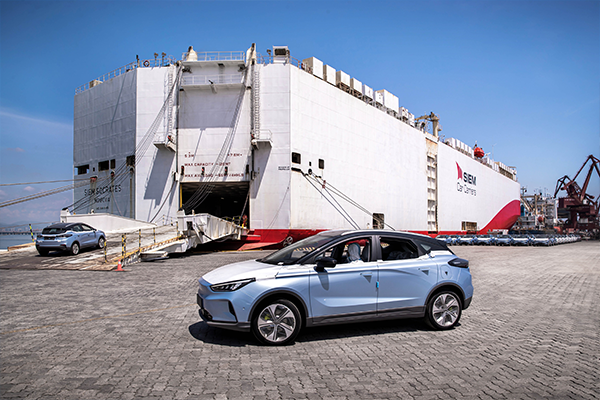
What Does Putin’s Beijing Trip Mean for China-Russia Auto Trade?
Russian President Vladimir Putin arrived in China on May 19, 2026, for a state visit that coincides with the 25th anniversary of the China-Russia Good-Neighborly Treaty and 30 years of comprehensive strategic partnership. His delegation includes five deputy prime ministers and eight ministers spanning foreign affairs, transport, and economic development—signaling that this is not a ceremonial trip but a negotiation-heavy mission to redefine bilateral industrial cooperation.
For the automotive sector, the timing is critical. China exported 1.16 million vehicles to Russia in 2024, making it the largest overseas destination for Chinese automakers. By 2025, that figure collapsed to 632,000 units—a 45% year-on-year contraction. The cause was not reduced demand but deliberate policy: Russia raised recycling fees by 70–85% in October 2024, tightened OTTC certification requirements in July 2025, and passed the Taxi Vehicle Localization Act in March 2026, introducing a points-based system that effectively forces foreign brands to manufacture locally or exit the market.
Putin’s visit occurs at this inflection point. The question is whether Beijing and Moscow will negotiate relief for Chinese exporters—or accelerate the shift from finished vehicle trade to production line partnerships.
The Rise and Fall of China’s Russia Export Boom
Between 2021 and 2023, Chinese brands captured 61% of Russia’s passenger car market, up from just 9% before Western sanctions redirected supply chains. Haval, Chery, Geely, and Omoda became household names as European, Japanese, and Korean manufacturers withdrew, leaving 1.5 million units of annual demand unmet.
The 2024 peak of 1.16 million Chinese exports to Russia represented a gold rush. But Moscow viewed this as structural vulnerability. Russia’s automotive industry, already battered by sanctions, saw its domestic assembly capacity hollow out. The government’s response was a classic “import substitution” playbook: use market access as leverage to force technology transfer and local production.
The recycling fee hike, applied to all imported vehicles including those from EAEU member states, added $7,000+ to the cost of 1.0–2.0L vehicles—the core segment for Chinese brands. The OTTC certification upgrade in July 2025 added bureaucratic friction, while the March 2026 Taxi Localization Act required manufacturers to accumulate “localization points” through local assembly, parts sourcing, and R&D investment to qualify for fleet sales—a massive channel in Russia’s 624,000-unit used car market.
The result: Chinese exports halved. But Russian demand did not disappear. Consumers still bought 1.3 million new passenger cars in 2025, with Chinese brands holding 55% share. The difference is that an increasing share of these “Chinese” cars were assembled in Russian plants using SKD kits, not imported as complete vehicles.
Russia’s Forced Localization: Policy Details and Business Impact
Understanding the new regulatory architecture is essential for any Chinese automotive company still targeting Russia.
| Policy Instrument | Effective Date | Mechanism | Impact on Chinese Exporters |
|---|---|---|---|
| Recycling Fee Hike | Oct 2024 | Fee increase 70–85% based on engine size | Adds $5,000–$12,000 per imported unit; wipes out price advantage for budget models |
| OTTC Certification Upgrade | July 2025 | Stricter technical compliance, longer approval cycles | Delays new model launches 3–6 months; favors established players with local testing infrastructure |
| Taxi Localization Act | Mar 2026 | Points system: assembly (30pts), parts sourcing (25pts), R&D (20pts), after-sales (15pts), training (10pts) | Blocks fleet sales for non-compliant brands; forces JV or wholly-owned factory investments |
| Used EV Import Incentives | 2025–2028 | 20% tariff exemption for used BEV/PHEV; personal buyer subsidy up to ₽50,000 | Creates parallel channel for Chinese used EVs; bypasses new car localization requirements |
These policies are not hidden protectionism—they are explicit industrial strategy. Russia’s Minister of Industry and Trade, Anton Alikhanov, has stated publicly that Moscow wants Chinese partners to build engines, transmissions, and electronics in Russia, not just screw together kits.
For Chinese automakers, this presents a binary choice: retreat to other markets, or convert export revenue into capital expenditure on Russian assembly plants and local supply chains.
How Chinese Automakers Are Adapting: Three Strategic Models
The market contraction has not produced uniform retreat. Instead, Chinese companies are splitting into three distinct strategic postures:
Model 1: Deep Localization (GWM, Chery)
Great Wall Motors (GWM) operates the most advanced Chinese automotive facility in Russia—its Tula plant, expanded to 200,000 units annually with an adjacent engine factory producing 1.5L and 2.0L turbocharged powertrains. GWM’s Haval brand now qualifies for the Taxi Localization Act’s full points allocation, securing fleet contracts that competitors cannot access.
Chery follows a similar trajectory, operating SKD assembly at existing Russian facilities while evaluating greenfield investments in Moscow or Siberia. Both companies accept the reality that Russia is no longer an export market but a manufacturing base requiring 5–10 year capital commitment.
Model 2: Indirect Access (Geely, BelGee)
Geely has taken a lower-risk route through its Belarusian joint venture, BelGee. Vehicles assembled at the BelGee plant in Belarus enter Russia under EAEU free trade rules, avoiding recycling fees and qualifying for simplified certification. This “near-shoring” model sacrifices margin to local partners but preserves capital flexibility.
Model 3: Premium Niche and Used EV (Li Auto, Voyah, Zeekr, Avatr)
For brands without mass-market volume to justify factory investment, Russia has become a premium EV playground. Li Auto, Voyah, Zeekr, and Avatr export high-margin electric and range-extended vehicles to Russian dealers, targeting affluent buyers less sensitive to price. The used EV import channel—exempt from 20% tariffs until 2028 and eligible for ₽50,000 personal subsidies—provides an alternative pathway for aging Chinese EV inventory to find Russian buyers.
The Production Line Opportunity: Why CKD/SKD Assembly Is Now Essential
Here is the critical insight for China’s automotive supply chain: Russia’s localization push is not bad news for all Chinese automotive businesses. It is catastrophic for pure trader shipping finished vehicel. It is transformative for companies selling car production machinery.
Every SKD kit assembled in Russia requires:
- Stamping press lines or at minimum blanking and forming dies for body panels
- Welding fixtures and semi-automated body assembly jigs—Russian plants currently operate at lower automation density than Chinese equivalents, creating upgrade demand
- Paint shop equipment including electrocoat tanks, spray booths, and curing ovens—Russia’s existing Soviet-era paint infrastructure cannot meet modern corrosion standards
- Final assembly conveyor systems with kit sequencing, torque monitoring, and end-of-line validation
- EV-specific infrastructure: battery pack assembly stations, high-voltage testing equipment, and thermal management calibration rigs
Russia’s domestic automotive equipment industry is negligible. European suppliers (Dürr, KUKA, ABB) have withdrawn or face sanctions complications. Japanese and Korean vendors are politically constrained. This leaves Chinese production line exporters as the natural suppliers for Russia’s forced localization drive.
The business model shift is clear: instead of selling 10,000 finished SUVs to a Russian distributor at $18,000 each ($180M revenue), a Chinese company can sell a 30,000-unit annual capacity CKD assembly line for $25–40M, plus annual spare parts and technical service contracts. The margin structure is different but defensible—and politically insulated from recycling fee volatility.
CAUTO Global: Delivering Turnkey Automotive Production Lines for Russia’s Localization Era
China Automotive Global Supply Chain Co., Limited (CAUTO Global) operates at the intersection of this structural shift. We do not export finished vehicles. We exprot the capacity to build vehicles locally—turnkey car production machinery configured for CKD, SKD, and OEM assembly modes.
Our integrated solutions cover the full manufacturing sequence:
- Stamping and forming lines compatible with both steel and aluminum body-in-white requirements
- Robotic welding shops utilizing KUKA KR QUANTEC and ABB IRB 6700 series arms, configured for the mixed-model flexibility Russian plants need to handle multiple Chinese brands on shared lines
- Paint shop systems meeting GOST-R and EAEU environmental standards, with VOC abatement and water treatment integrated
- Final assembly systems with AGV-based conveyor architecture, allowing reconfiguration as production volumes scale from 15 JPH to 30 JPH
- EV upgrade pathways: pre-wired electrical infrastructure and battery marriage station layouts that activate when Russian EV demand justifies the transition
CAUTO’s reference installations span Southeast Asia, Africa, the Middle East, and Central Asia—markets sharing Russia’s characteristics of regulatory evolution, variable power infrastructure, and workforce skill gaps. We understand that a production line shipped to Kazan or Kaluga must include operator training protocols designed for local technical education levels, spare parts logistics routed through stable corridors, and remote diagnostic capabilities that reduce dependency on flying Chinese technicians to Moscow every time a servo fault triggers.
For Chinese automakers committed to Russia, CAUTO provides the manufacturing backbone that converts political localization requirements into operational reality. For Russian industrial partners seeking to rebuild domestic automotive capacity, we offer Chinese equipment efficiency without Chinese brand equity dilution—our lines can assemble Haval, Chery, or bespoke Russian-branded vehicles from the same physical infrastructure.
What to Watch During Putin’s Visit: Three Scenarios
The May 19–20 summit will produce concrete signals about the trajectory of automotive cooperation:
Scenario A: Accelerated Localization Framework If joint statements include specific automotive industrial cooperation annexes—mentioning joint ventures, technology parks, or preferential financing for assembly investments—this confirms the “forced localization” model is hardening. Chinese brands without factory plans will be effectively excluded within 24 months.
Scenario B: Currency and Logistics Breakthroughs Any announcement expanding ruble-yuan settlement mechanisms beyond the current 92% level, or resolving cross-border payment friction for capital equipment (not just commodities), would directly benefit production line exporters like CAUTO. Machinery deals are capital-intensive; payment channel stability matters as much as tariff rates.
Scenario C: EV Cooperation Corridor If Putin and Xi announce bilateral EV standards harmonization, charging infrastructure investment, or battery supply chain partnerships, this would signal Russia’s long-term automotive future is electric—despite current ICE dominance. Chinese EV production line technology, already the world’s most cost-competitive, would gain a decade-long installation window.
The New Rules of Russia’s Automotive Game
Russia’s automotive market is not closing to China. It is maturing from a simple import relationship into a complex manufacturing partnership. The companies that thrive will be those that stopped asking “How many cars can we ship?” and started asking “How much production capacity can we build locally?”
The 632,000 vehicles China exported to Russia in 2025 represent the trailing edge of the old model. The leading edge is GWM’s Tula engine plant, Chery’s SKD negotiations, and the unnamed Russian assembly halls currently being equipped with Chinese stamping presses and welding robots.
For vehicle exporters, the window for easy FBU revenue is closing. For production line suppliers, the window is just opening.
[Discuss your Russia CKD assembly line project →]
CAUTO provides floor plans, equipment lists, and investment breakdowns within 72 hours. Typical project timeline: 12–18 months from contract to first vehicle rollout.
FAQ: Russia’s Automotive Localization and Chinese Car Production Lines
Q: Can Chinese companies still export finished vehicles to Russia profitably? A: Only in premium segments or through used EV channels. For mass-market ICE vehicles, recycling fees and localization requirements have eliminated the price advantage. SKD/CKD assembly is now the minimum viable entry mode.
Q: What is the typical investment for a 30,000-unit CKD assembly line in Russia? A: $15–35 million depending on automation level and vehicle complexity. Semi-automated configurations with manual welding and kit assembly start at the lower end; robotic body shops and integrated paint lines push toward the upper range. CAUTO provides modular designs that scale with volume.
Q: How does Russia’s sanctions environment affect equipment supply? A: European and Japanese automotive machinery is largely unavailable. Chinese equipment faces no sanctions and can be shipped via rail through Kazakhstan or by sea to St. Petersburg/Vladivostok. Payment is settled in yuan through Chinese banks, bypassing SWIFT restrictions.
Q: What training is required for Russian workers to operate Chinese production lines? A: Basic assembly operations require 3–4 weeks. Welding robot programming and paint shop process control need 3–6 months. CAUTO includes comprehensive training protocols and can embed Chinese technicians for the first 6–12 months of production ramp-up.