






The Middle East EV Market Is No Longer a Niche
The Gulf Cooperation Council’s electric vehicle market has doubled its penetration from 2% to 4% within twelve months. In the United Arab Emirates, 24,000 EVs and plug-in hybrids found buyers in 2024. Saudi Arabia saw its EV sales surge nearly tenfold to over 11,000 units in the same period. These are not early-adopter experiments anymore. They are structural shifts backed by sovereign wealth, regulatory mandates, and infrastructure commitments that will reshape the region’s automotive landscape through 2030.
What makes this transition different from Europe or China’s EV trajectory is the dual nature of Gulf demand. The UAE is building a luxury consumption hub for electric mobility. Saudi Arabia is constructing an indigenous manufacturing ecosystem. One market imports finished vehicles. The other will soon demand the machinery to build them locally. Cauto Global operates across both modes—supplying China’s electric vehicles to Dubai showrooms and China’s production lines to factories.
Dubai and the UAE: Policy Architecture of a Premium EV Test Bed
The Emirates has approached electrification as a top-down redesign of urban mobility. Dubai’s Green Mobility Strategy 2030 targets 42,000 EVs on the road. Abu Dhabi’s National Electric Vehicles Policy sets a 2050 horizon where half of all vehicles are electric. These are not aspirational statements. They are enforced through fiscal architecture that eliminates every friction point for EV adoption.
Import duty exemption removes the 5% tariff on conventional vehicles. Registration fee waivers cut the 5% federal tax. Free Salik toll tags and designated free parking reduce daily operating costs to near zero. Government fleet mandates require 30% of Dubai government vehicles to be electric by 2030—creating a guaranteed institutional demand channel that private operators can service.
The charging infrastructure has kept pace. Dubai Electricity and Water Authority operates 1,270+ charging points across the emirate. Abu Dhabi’s ADNOC-TAQA partnership is installing 500 additional stations. The Emirates now has one of the densest fast-charging networks per capita outside China and Norway.
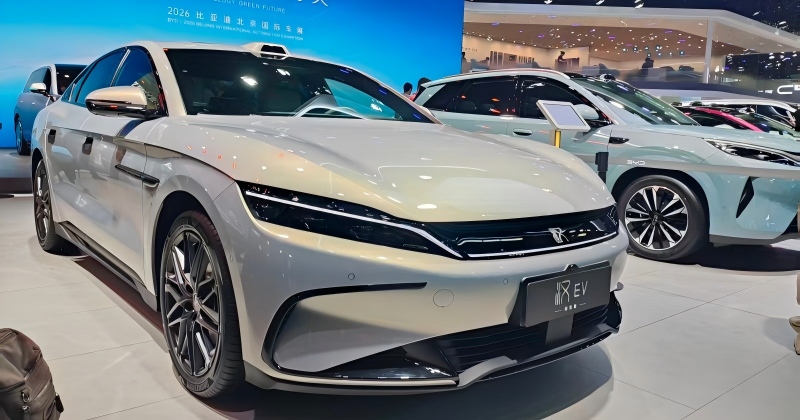
This policy environment has attracted Chinese brands aggressively. BYD partnered with Al-Futtaim Automotive to establish showroom and service networks across the UAE. Zeekr entered the market through direct distribution targeting the premium segment. These are not speculative market tests. They are permanent channel investments predicated on the UAE becoming the GCC’s EV distribution hub—serving not just local demand but re-export flows to Oman, Bahrain, Kuwait, and eventually Saudi Arabia’s eastern provinces.
Saudi Arabia: From Oil Kingdom to EV Manufacturing Powerhouse
Saudi Arabia’s EV transition operates on an entirely different logic. Vision 2030 does not merely want Saudis driving electric cars. It wants Saudi factories building them. The Kingdom’s EV market reached SAR 32 billion ($8.53 billion) in 2024. Nexdigm projects this will expand to SAR 180 billion ($48 billion) by 2030—a compound annual growth rate of 35% that outpaces every other automotive market globally.
The policy instruments are direct and capital-intensive. The Public Investment Fund has committed over $200 billion to EV infrastructure and manufacturing. The target is 50,000 charging stations nationwide. EVIQ, the PIF-backed charging subsidiary, is deploying 5,000 chargers across 1,000 locations. Import duties on EVs are waived. Vehicle usage taxes are reduced. Parking is free.
But the decisive policy is domestic manufacturing mandates. Lucid Motors operates a 155,000-unit annual capacity plant in King Abdullah Economic City, with PIF holding a 60% ownership stake. Ceer, the PIF’s indigenous brand, is building a 175,000-unit facility in partnership with Foxconn and BMW, targeting 2026 production start. These are not assembly plants screwing together SKD kits. They are integrated manufacturing complexes with stamping, body welding, paint shops, and battery pack assembly—the full industrial stack that Saudi Arabia has never possessed.
The localization imperative extends beyond finished vehicles. Saudi Arabia imports over $24 billion in automotive parts annually. Vision 2030’s industrial strategy explicitly targets replacing these imports with domestic production. The opportunity is not merely selling EVs to Saudi consumers. It is selling the capacity to build EVs—and their components—inside the Kingdom.
The China Factor: Why Chinese Brands Dominate Middle East EV Entry
Chinese automakers hold structural advantages in the GCC that European and Korean incumbents struggle to match. The product-market fit is precise. Gulf climates demand battery thermal management systems capable of sustaining 50°C ambient temperatures without performance degradation. Chinese EVs, engineered for Shenzhen and Chongqing summers, arrive with this capability standard. European EVs often require regional recalibration.
Range anxiety dissolves in the GCC context differently than in Europe. The longest inter-city drive in the UAE is 350 kilometers. Saudi Arabia’s major population centers—Riyadh, Jeddah, Dammam—form a triangle where 500-kilometer range covers all commercial routes. Chinese EVs at the 600–800 kilometer CLTC rating translate to 450–600 kilometers real-world Gulf driving, eliminating the psychological barrier that slows adoption in Germany or the UK.
Price positioning completes the advantage. Chinese EVs typically undercut European equivalents by 20–40% at equivalent specification levels. In markets where fuel is historically cheap and total cost of ownership calculations are new consumer behaviors, upfront capital cost remains the dominant purchase criterion. The UAE’s exemption of import duties and registration fees on EVs amplifies this Chinese price advantage rather than neutralizing it.
The channel strategy has evolved from distributor relationships to equity partnerships. Al-Futtaim’s BYD collaboration includes dedicated service centers with Chinese-speaking technicians. Wallan Group and AW Rostamani have established parallel Chinese EV divisions. These dealer groups are not passive order-takers. They are co-investing in charging infrastructure, training programs, and localized marketing—creating defensive moats that make switching costs high for consumers and new entrants.
From Vehicle Export to Production Line Export: Cauto Global’s Strategic Positioning
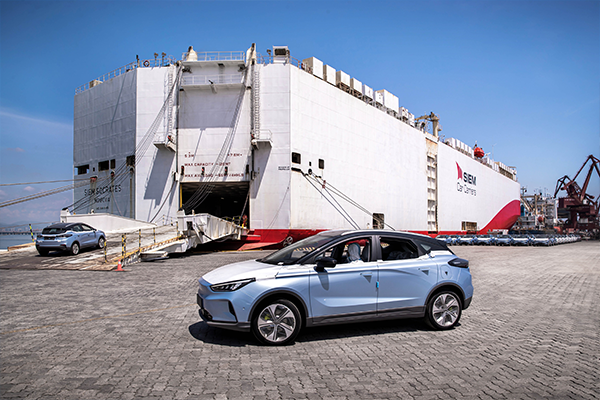
The GCC’s EV evolution is bifurcating into two distinct business models. The UAE represents the import-driven phase—finished vehicles arriving at Jebel Ali Port, clearing customs under exemption, and distributing through established dealer networks. Saudi Arabia is entering the localization-driven phase—where market access becomes conditional on domestic manufacturing investment, local parts sourcing, and technology transfer.
Cauto Global operates across both phases with differentiated service architectures.
Phase One: Dubai Operations Center
Cauto Global’s Dubai hub functions as the GCC’s entry node for Chinese EV manufacturers. Services include:
- Regulatory navigation: GSO conformity certification, UAE-specific labeling requirements, and ADNOC fuel economy testing protocols
- Logistics optimization: Jebel Ali Port customs clearance, bonded warehousing, and GCC-wide distribution routing
- Dealer matching: Introductions to Al-Futtaim, Wallan, AW Rostamani, and emerging independent EV specialists
- After-sales infrastructure: Spare parts stocking in Dubai Industrial City, Arabic-language technical documentation, and remote diagnostic support
This is not trading. It is market entry architecture. A Chinese EV brand arriving in Dubai without Cauto Global’s regulatory and channel support faces 6–12 month delays in certification and dealer negotiations—delays that consume cash reserves and surrender first-mover advantage to competitors.
Phase Two: Saudi Production Line Deployment
Saudi Arabia’s Lucid and Ceer factories are merely the visible apex of a broader industrialization wave. The Kingdom’s automotive parts import bill—$24 billion annually—represents the addressable market for localization. Every riyal spent importing stamped body panels, welded subframes, painted components, or battery modules is a riyal the Saudi government wants redirected to domestic factories.
Cauto Global’s production line solutions target this substitution demand:
| Production Zone | Equipment Scope | Saudi Market Relevance |
|---|---|---|
| Stamping | Mechanical presses (600–2,500 ton), progressive dies, blanking lines | Body panel localization for Lucid/Ceer supply chain |
| Body Welding | KUKA KR QUANTEC robotic cells, ABB IRB 6700 articulated arms, manual fixture jigs | Subframe and chassis assembly for parts suppliers |
| Paint Shop | Dürr-compatible EcoRP spray applicators, E-coat immersion systems, VOC abatement | Component painting meeting Saudi environmental standards |
| Final Assembly | AGV-based conveyor systems, kit sequencing, torque monitoring | CKD/SKD vehicle assembly for secondary brands |
| Battery Pack | Module assembly stations, thermal management calibration, high-voltage testing | EV-specific infrastructure for 2030 capacity targets |
| End-of-Line | Wheel alignment, headlight aiming, brake testing, rain simulation | Quality validation for domestic and export certification |
The technical specifications account for Saudi operational realities. Ambient temperature ratings on all electrical systems are derated to 55°C. Dust ingress protection reaches IP65 on critical drive components. Power supply conditioning handles the voltage fluctuations common in industrial zones outside Riyadh and Jeddah. These are not catalog modifications. They are engineering adaptations derived from Cauto Global’s installations in similarly challenging climates across Africa and Central Asia.
CAUTO Global: Dubai Hub, Saudi Deployment, China Engineering
China Automotive Global Supply Chain Co., Limited (CAUTO Global) has structured its Middle East operations around a simple geographic logic. Dubai manages relationships and regulatory compliance. Saudi Arabia executes industrial projects. China maintains engineering and manufacturing.
The Dubai operations center provides GCC-wide coverage from a single regulatory jurisdiction. The UAE’s free zone architecture allows 100% foreign ownership, zeor corporate tax, and full capital repatriation—creating a financial and legal base that Saudi Arabia’s evolving foreign investment framework has not yet matched. From Dubai, Cauto Global coordinates vehicle shipments to Oman, Bahrain, Kuwait, and Qatar while maintaining direct technical service relationships with Saudi industrial clients.
In Saudi Arabia, Cauto Global’s engagement model adapts to the Kingdom’s project scale. For Lucid and Tier-1 suppliers, the focus is high-automation integration—robotic welding shops and paint lines meeting global OEM standards. For secondary entrants and parts manufacturers, Cauto Global offers modular semi-automated configurations that start at 15 JPH with upgrade pathways to 30 JPH as volume justifies capital expansion. For government-backed industrial zone developments, Cauto Global provides turnkey EPC packages including civil works coordination, utility integration, and operator training programs designed for Saudi technical education levels.
The workforce development component is critical. Saudi Arabia’s automotive manufacturing experience is shallow. Cauto Global’s training protocols extend beyond equipment operation to include maintenance diagnostics, quality system management, and production line balancing. Chinese technicians embed for 6–12 months during production ramp-up, transitioning to remote diagnostic support as Saudi engineering teams achieve operational independence.
Market Timing: Why 2026 Is the Critical Entry Window
The GCC’s EV market is crossing from early adoption to mass deployment. The evidence is in consumer behavior, not just policy documents. Roland Berger’s 2025 EV Charging Index reports that 91% of GCC EV owners intend to purchase electric again—exceeding the 87% global average. This retention rate signals market maturation. It means the initial wave of buyers is not experimenting. They are converting.
For vehicle exporters, the window for premium positioning is narrowing. As charging infrastructure densifies and model availability expands, price competition will intensify. First movers in 2024–2025 captured margins of 25–35% on Chinese EVs in the UAE. By 2027, margin compression to 15–20% is likely as more brands enter and dealer commissions standardize.
For production line suppliers, the window is widening but requires immediate positioning. Lucid and Ceer have secured their primary equipment vendors. But their supplier ecosystems—Tier-1 and Tier-2 parts manufacturers needing stamping, welding, and assembly capacity—are still forming. These secondary suppliers represent Cauto Global’s core Saudi addressable market. They need production lines faster than European vendors can deliver, at costs lower than Japanese alternatives, with technical support that understands emerging-market operational constraints.
The Dubai-to-Saudi pipeline is equally time-sensitive. Chinese EV brands establishing UAE distribution now will face Saudi localization requirements by 2028–2029. Those with Cauto Global production line partnerships already in development can transition from import mode to local assembly seamlessly. Those without will face the same binary choice that confronted Chinese automakers in Russia: retreat or invest under pressure.
Capturing the GCC’s Electric Future
The Middle East’s EV transition is not a single market. It is two parallel transformations. The UAE is building a consumption infrastructure—showrooms, charging networks, and luxury positioning. Saudi Arabia is building a production infrastructure—factories, supply chains, and sovereign manufacturing capacity.
Cauto Global serves both. We move China’s electric vehicles through Dubai’s ports to GCC consumers. We move China’s production machinery through Jeddah’s industrial zones to Saudi factories. These are not separate businesses. They are sequential phases of the same market entry strategy—vehicle exports establishing brand presence today, production line exports securing market position tomorrow.
The $48 billion Saudi EV market projected for 2030 will not be served by imports alone. The Kingdom’s localization mandates, PIF manufacturing investments, and parts substitution targets ensure that production capacity inside Saudi Arabia is the price of long-term participation. Cauto Global provides that capacity—engineered in China, deployed in Saudi Arabia, managed from Dubai.
[Request your GCC market entry assessment →]
Cauto Global delivers customized vehicle export logistics plans and production line investment proposals within 72 hours. Dubai operations active. Saudi deployment ready.

FAQ: Middle East EV Market Entry and Production Line Deployment
Q: Is the UAE or Saudi Arabia the better initial market for Chinese EV brands? A: The UAE offers lower barriers—established dealer networks, mature regulatory frameworks, and immediate demand. Saudi Arabia offers larger long-term volume but requires manufacturing investment or premium positioning to bypass localization mandates. Most Cauto Global clients stage entry: Dubai first for revenue and brand validation, Saudi Arabia second for scale and production line deployment.
Q: What is the typical investment for a CKD assembly line in Saudi Arabia? A: A 15,000–30,000 unit annual capacity semi-automated CKD facility ranges from $12 million to $28 million, depending on vehicle complexity and automation level. Full robotic body shops and integrated paint lines push toward $40–60 million. Cauto Global provides modular configurations that scale with demand rather than requiring full upfront capital commitment.
Q: How does Saudi Arabia’s extreme heat affect production line specifications? A: Ambient temperatures exceeding 50°C require derated electrical systems, enhanced cooling on servo motors and drives, and dust-sealed enclosures rated IP65 or higher. Cauto Global’s Gulf-specific engineering package includes these adaptations as standard, derived from installations in similarly demanding climates.
Q: Can CAUTO Global support both vehicle export and production line export from the same client relationship? A: Yes. This is CAUTO Global’s core value proposition. We establish Chinese brands in the UAE through vehicle distribution, then transition the same client to Saudi production line deployment as their volume and localization requirements mature. The regulatory knowledge, dealer relationships, and technical documentation developed during the export phase accelerate the production line phase.