






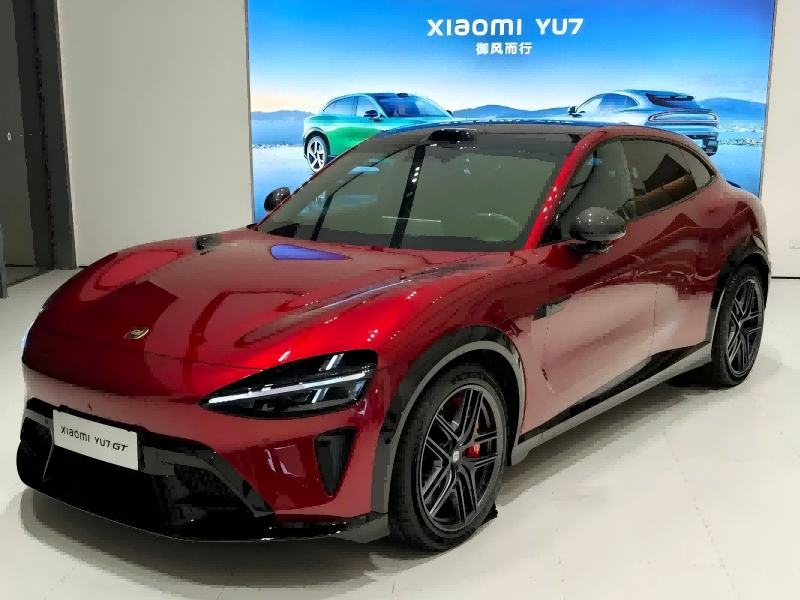
Exportação de veículos elétricos novos (NEV) da China para África entrou numa fase de transformação. Só nos primeiros cinco meses de 2025, os fabricantes de automóveis chineses enviaram 222 000 veículos para o continente — um aumento impressionante de 67% em relação ao mesmo período do ano anterior. Maio de 2025 registou um recorde mensal de 58 000 unidades, um aumento de 104% em relação ao ano anterior. Para os importadores africanos, operadores de frotas e responsáveis pelas aquisições públicas que pretendem importação de veículos elétricos da China, este aumento representa tanto uma oportunidade sem precedentes como um sinal de que o panorama competitivo está a mudar rapidamente.
Com a taxa de propriedade de veículos em África a situar-se em cerca de 40 automóveis por cada 1 000 habitantes — em comparação com mais de 800 na Europa —, o continente representa uma das últimas grandes fronteiras do setor automóvel. Os fabricantes chineses, munidos de tecnologia de eletrificação avançada, preços competitivos e modelos de negócio flexíveis, estão a posicionar-se para aproveitar este crescimento. Para os importadores que procuram soluções de abastecimento de ponta a ponta, CAUTO Global presta serviços abrangentes de aquisição de veículos e logística, ligando diretamente os concessionários africanos aos principais fabricantes chineses de veículos elétricos novos (NEV).
A situação atual das exportações de veículos de energia nova (NEV) da China para África
Crescimento explosivo em termos numéricos: Resumo dos dados de 2025–2026
A dimensão da expansão do setor automóvel chinês em África já não é meramente anedótica — é mensurável, sustentada e está a acelerar. De acordo com dados do setor, as marcas chinesas independentes detinham mais de 20% do mercado africano no início de 2026, um valor que teria sido inimaginável há apenas cinco anos. A trajetória é igualmente impressionante: a AlixPartners prevê que as marcas chinesas irão expandir a sua quota no Médio Oriente e em África de aproximadamente 10% em 2024 para 34% até 2030.
Principais dados (janeiro–maio de 2025):
- Total das exportações de veículos da China para África: 222 000 unidades (+67% em relação ao ano anterior)
- Volume mensal de maio de 2025: 58 000 unidades (+104% em relação ao mesmo período do ano anterior)
- Exportações de veículos híbridos plug-in (PHEV): 3 000 unidades (+1 481% em relação ao ano anterior)
- Exportações de veículos híbridos elétricos (HEV): 2 000 unidades (+362% em relação ao ano anterior)
- Quota de mercado das marcas chinesas em África (2026): >20%
Talvez o mais revelador seja a composição destas exportações. Embora os veículos tradicionais com motor de combustão interna ainda dominem em números absolutos, a viragem para a eletrificação é inconfundível. As exportações de híbridos recarregáveis (PHEV) para África registaram um aumento de 1,481% em relação ao ano anterior, enquanto as remessas de híbridos (HEV) aumentaram 362%. Não se trata apenas de uma questão de volume — reflete uma adaptação estratégica às realidades das infraestruturas africanas, onde as redes elétricas pouco fiáveis tornam os veículos elétricos a bateria (BEV) mais difíceis de vender fora dos centros urbanos.
Por que razão África está a tornar-se uma prioridade estratégica para os fabricantes de automóveis chineses
Três forças convergentes estão a impulsionar esta reorientação. Em primeiro lugar, os obstáculos regulamentares na Europa e na América do Norte — direitos aduaneiros, inquéritos anti-subvenções e atritos geopolíticos — tornaram os mercados ocidentais tradicionais menos favoráveis às marcas chinesas. Em segundo lugar, o próprio ambiente político em África está a tornar-se mais favorável: o Quénia lançou a sua Política Nacional de Mobilidade Elétrica em setembro de 2023, o Ruanda está a testar frotas de autocarros elétricos e o Livro Branco da África do Sul sobre Veículos Elétricos oferece uma dedução fiscal de 150% nas despesas com I&D. Em terceiro lugar, e mais fundamentalmente, os fabricantes chineses alcançaram uma escala e uma estrutura de custos que tornam viáveis os níveis de preços africanos sem sacrificar a qualidade.
De “Mercado Marginal” a Motor de Crescimento Central
Durante anos, África foi tratada como uma prioridade secundária pelas fabricantes automóveis globais — um destino para veículos usados e carros económicos de baixa margem de lucro. Essa narrativa inverteu-se. Hoje, as marcas chinesas estão a lançar novos modelos em África em simultâneo com, ou mesmo antes das suas estreias europeias. O Atto 3 da BYD, o Omoda 5 EV da Chery e o Ora Funky Cat da Great Wall estão todos disponíveis na África do Sul, no Egito e no Quénia, com especificações adaptadas às condições locais. A mensagem é clara: África já não é um mercado secundário; é um motor de crescimento primordial.
Principais marcas chinesas de veículos elétricos (NEV) a dominar o mercado africano
O panorama competitivo em África está cada vez mais concorrido, mas algumas marcas chinesas conseguiram afirmar-se claramente como líderes.
| Marca | Principais mercados africanos | Desempenho em 2025 | Força do tronco | Modelos de referência |
|---|---|---|---|---|
| BYD | África do Sul, Gana, Zimbabué, Quénia | 6 modelos na África do Sul; camiões elétricos em serviço em 4 países | Tecnologia das baterias, autonomia dos veículos híbridos plug-in (PHEV), veículos elétricos comerciais | Atto 3, Seal, Dolphin, e6, T3 (furgão), J6 (camião) |
| Chery | Egito, África do Sul, Argélia | Quota de mercado do 10% no Egito; vendas do grupo de 47 000 unidades na África do Sul (4.º lugar na classificação geral) | Estratégia multimarcas, produção local | Tiggo 8 Pro, Omoda 5, Jaecoo 7, eQ1 |
| Great Wall Motors | África do Sul, Nigéria, Egito | 27 000 unidades na África do Sul; 6.º lugar por marca (fevereiro de 2026) | SUV, pick-ups, sistemas de propulsão híbridos | Haval H6 HEV, Jolion, GWM Cannon (pick-up), Ora Funky Cat |
| SAIC MG | África do Sul, Egito, Marrocos | Forte aposta do Reino Unido e da Itália na África; expansão da rede de concessionários | Posicionamento em termos de valor, herança da marca europeia | MG4 EV, ZS EV, HS PHEV, Marvel R |
| Leapmotor | África do Sul (lançamento a partir de 2025) | Novo operador no mercado; estratégia de preços agressiva | Veículos elétricos ultracompactos, liderança em termos de custos | T03, C11, C01 |
| Deepal (Changan) | South Africa, Egypt | 2025 Africa debut; targeting mid-range segment | Smart cockpit, extended-range EVs | SL03, S7 |
BYD: The Market Pioneer with Rapid Expansion
BYD’s African strategy is arguably the most comprehensive among Chinese brands. In South Africa, the company expanded its lineup from three to six models within a single year, with more than half being plug-in hybrids—a deliberate choice reflecting local charging infrastructure constraints. Beyond passenger cars, BYD has made significant inroads into commercial electrification: its T3 vans and J6 trucks are now operational in Ghana, Zimbabwe, and Kenya, serving logistics fleets and public transport operators. This dual-track approach—passenger and commercial—gives BYD a structural advantage as African governments prioritize fleet electrification for emissions reduction.
Chery: Multi-Brand Strategy and Local Production
Chery’s African footprint is built on depth rather than breadth. In Egypt, the brand holds a 10% market share and ranks third overall, with SAIC MG close behind at fifth. But Chery’s most consequential move came in South Africa, where its group sales (including Omoda and Jaecoo sub-brands) reached 47,000 units in 2025, placing it fourth behind Toyota, Volkswagen, and Suzuki. Critically, Chery acquired Nissan’s Rosslyn assembly plant near Pretoria, giving it local manufacturing capacity with a planned annual output approaching 500,000 units. This transition from CBU (completely built-up) imports to local assembly is the template other Chinese brands are following.
Great Wall Motors & Haval: SUV and Pickup Specialists
Great Wall Motors understands African terrain. Its Haval SUV lineup and GWM Cannon pickup are engineered for the rough roads and heavy loads common across the continent. The H6 Hybrid, in particular, has resonated with South African buyers seeking fuel efficiency without range anxiety. With 27,000 units sold in South Africa in 2025 and a brand ranking that climbed to sixth by February 2026, GWM is proving that hybrid technology is the pragmatic bridge to full electrification in Africa.
SAIC MG & Rising Brands: Deepening Market Penetration
SAIC’s MG brand brings a unique advantage: European name recognition combined with Chinese manufacturing economics. After facing tariff barriers in the EU, MG has redirected significant export capacity toward Africa and the Middle East. Its MG4 EV and ZS EV offer compelling value propositions for urban African buyers, while the HS PHEV addresses the hybrid demand gap. Meanwhile, newer entrants like Leapmotor and Deepal are entering the market with aggressive pricing and technology-forward positioning, ensuring that competition—and choice—will only intensify.
Why Chinese NEVs Are Winning in Africa: Core Advantages
Unmatched Cost-Performance Ratio
The most immediate advantage Chinese NEVs offer African buyers is price. A BYD Dolphin or MG4 EV typically costs 30–50% less than a comparable European or Japanese electric vehicle, while offering equivalent or superior range, charging speed, and interior technology. This gap is structural: Chinese manufacturers benefit from vertically integrated battery supply chains, government-scale production subsidies, and decades of cost optimization. For African markets where affordability is the primary purchase driver, this equation is decisive.
Hybrid & PHEV Solutions Tailored for African Infrastructure
Pure battery electric vehicles face a fundamental challenge in much of Africa: charging infrastructure remains sparse outside major cities, and grid reliability is inconsistent. Chinese manufacturers have responded with product strategies that acknowledge this reality. Chery plans to launch eight hybrid models in Africa, five of which will be plug-in hybrids. BYD’s DM-i super-hybrid system delivers 1,000+ km combined range, effectively eliminating range anxiety. Great Wall’s H6 Hybrid achieves fuel consumption figures that undercut even the most efficient Japanese competitors. These are not compromises—they are products engineered for the market they serve.
Robust Supply Chain & After-Sales Network
Chinese brands are investing heavily in African after-sales infrastructure. Chery’s acquisition of the Nissan Rosslyn plant includes a commitment to local parts warehousing and technician training. BYD has established service partnerships in Ghana, Kenya, and South Africa. GWM operates dedicated parts distribution centers in Johannesburg and Cairo. This is a critical evolution: early Chinese car exports to Africa were sometimes undermined by parts availability issues, but the current generation of exporters understands that sustainable market share requires sustainable service.
Flexible Business Models: CBU, CKD, SKD & Full Production Lines
Perhaps the most significant differentiator is the flexibility of Chinese export offerings. Importers can choose from:
- CBU (Completely Built-Up): Ready-to-sell vehicles shipped directly from Chinese ports
- CKD (Completely Knocked Down): Vehicle kits for local assembly, reducing import duties and creating local employment
- SKD (Semi-Knocked Down): Partially assembled kits requiring less sophisticated local facilities
- Full Production Lines: Complete manufacturing systems including welding, painting, final assembly, and quality inspection equipment
Beyond complete vehicles, CAUTO Global specializes in exporting full automotive production lines—including welding, painting, final assembly, and inspection systems—enabling African partners to build localized manufacturing capabilities from the ground up. This capability is particularly relevant for countries with industrialization mandates, such as Egypt, Morocco, and South Africa, where local content requirements are tightening.
How to Import New Energy Vehicles from China to Africa: A Step-by-Step Guide
For African importers and dealers, navigating the China-to-Africa vehicle supply chain requires systematic preparation. The following guide breaks the process into five actionable stages.
Step 1: Define Your Market & Vehicle Requirements
Before contacting any supplier, clarify your target segment. Are you importing passenger cars for retail sale, commercial vehicles for fleet operators, or public transport units for government tenders? Each segment demands different specifications:
| Segmento | Recommended Powertrain | Especificações principais | Price Range (CIF) |
|---|---|---|---|
| Urban Passenger (B/C-segment) | BEV or PHEV | 300–500 km range, AC charging, 5 seats | $15,000–$35,000 |
| Commercial Fleet (Vans/Trucks) | BEV | 200–400 km range, DC fast charging, cargo capacity | $25,000–$60,000 |
| Rural/Suburban SUV | HEV or PHEV | AWD option, high ground clearance, spare parts availability | $20,000–$45,000 |
| Public Transport (Buses) | BEV | 200+ km range, high passenger capacity, depot charging | $80,000–$200,000 |
Additionally, confirm your country’s homologation requirements. South Africa operates under SABS standards, Egypt under EOS/ES standards, and Kenya under KEBS regulations. Most Chinese manufacturers can provide compliance documentation, but verification should occur before order confirmation.
Step 2: Select a Reliable Chinese Export Partner
The exporter you choose determines your risk exposure. Verify the following before committing:
- MOFCOM License: The exporter must hold a valid Ministry of Commerce vehicle export license
- Brand Authorization: Direct factory relationships or authorized distributor status
- Overseas Presence: Offices or service partners in Dubai, Nairobi, or other regional hubs
- Financial Stability: Request bank references and trade history
- Inspection Capability: Pre-shipment inspection by SGS, Bureau Veritas, or equivalent
When selecting a partner, verify their licensing and track record. CAUTO Global is a MOFCOM-licensed exporter with direct factory relationships across 30+ Chinese NEV brands, ensuring genuine stock availability and competitive CIF pricing. The company maintains procurement offices in major automotive manufacturing clusters and can facilitate factory visits for qualified buyers.
Step 3: Understand Import Regulations & Documentation
Documentation accuracy is non-negotiable. A single error in your Bill of Lading or Certificate of Origin can delay clearance by weeks. The standard document package includes:
| Documento | Objetivo | Issued By | Typical Turnaround |
|---|---|---|---|
| Bill of Lading (B/L) | Title of goods; proof of shipment | Shipping line / NVOCC | 3–5 days after sailing |
| Certificate of Origin (C/O) | Confirms manufacturing origin for duty calculation | CCPIT / Chamber of Commerce | 1–2 days |
| Fatura comercial | Transaction value for customs assessment | Exporter | Same day |
| Packing List | Details of cargo contents and dimensions | Exporter | Same day |
| SGS / BV Inspection Report | Pre-shipment quality and quantity verification | Third-party inspector | 2–3 days |
| Homologation Certificate | Proof of compliance with destination standards | Manufacturer / Testing lab | 5–10 days |
Most professional exporters can compile this package within five business days of payment confirmation. Ensure your customs broker in the destination country reviews all documents before the vessel departs—corrections at sea are expensive and time-consuming.
Step 4: Choose Shipping & Logistics Solutions
The primary export ports for Chinese vehicles to Africa are Guangzhou (Nansha), Shanghai, and Ningbo. Shipping timelines vary by destination:
- East Africa (Mombasa, Dar es Salaam): 22–28 days
- South Africa (Durban, Cape Town): 25–30 days
- West Africa (Lagos, Tema, Abidjan): 30–40 days
- North Africa (Alexandria, Casablanca): 20–25 days
CIF (Cost, Insurance, Freight) pricing is standard for vehicle exports, though experienced importers may negotiate FOB (Free On Board) terms if they have preferred freight forwarders. Ro-Ro (Roll-on/Roll-off) vessels are the norm for CBU shipments, while containerized transport is used for CKD/SKD kits or high-value individual units.
Step 5: After-Sales Support & Spare Parts Strategy
Vehicle sales are only the beginning of the revenue cycle. A sustainable import business requires:
- Parts Inventory: Maintain a 90-day stock of fast-moving consumables (brake pads, filters, wiper blades) and critical powertrain components (battery modules, inverters, control units for EVs)
- Technical Training: Send technicians to Chinese factories for EV-specific training, or arrange for factory engineers to conduct on-site programs
- Warranty Network: Establish clear warranty claim procedures with your Chinese supplier; negotiate extended warranty terms as a competitive differentiator
- Software Updates: For connected vehicles, confirm over-the-air (OTA) update capabilities and data roaming arrangements
Key African Markets: Opportunities & Entry Strategies
South Africa: The Continent’s Largest Auto Market
South Africa remains the anchor market for any serious Africa automotive strategy. With nearly 600,000 new vehicle sales in 2025 (up 15.7% from 2024), it offers both volume and sophistication. Fourteen Chinese brands are now active in the market, collectively holding a 14% share—second only to Japanese brands and ahead of German marques. The government’s White Paper on Electric Vehicles provides a 150% tax deduction on R&D spending and targets 20% EV share of new sales by 2035. For importers, the priority is establishing dealer relationships in Johannesburg, Cape Town, and Durban, while leveraging the Rosslyn industrial zone for potential CKD assembly partnerships.
Egypt: North Africa’s Manufacturing Hub
Egypt’s automotive market is dominated by Chinese brands at the mass-market level. In the top-20 sales rankings, Chinese manufacturers hold an 37.1% combined share, with Chery at third place and SAIC MG at fifth. The transfer of Nissan’s Rosslyn-equivalent facility to Chery signals a long-term commitment to Egyptian manufacturing, with planned annual capacity approaching 500,000 units. Egypt’s strategic position—bridging Africa, the Middle East, and Europe—makes it an attractive base for regional distribution. Import duty structures favor locally assembled vehicles, making CKD partnerships particularly viable.
Kenya & East Africa: E-Mobility Policy Drivers
Kenya’s National Electric Mobility Policy, launched in September 2023, has catalyzed both public and private investment in EV infrastructure. The BasiGo electric bus program has secured orders for 132 units, with Chinese manufacturers supplying the majority of chassis and battery systems. Beyond buses, Kenya’s motorcycle market—estimated at over 1.5 million registered units—represents a massive electrification opportunity, with Chinese electric motorcycle kits gaining traction. For importers, Nairobi serves as the logistical gateway to Uganda, Tanzania, Rwanda, and Ethiopia.
Nigeria & West Africa: High-Volume Potential
Nigeria, as Africa’s largest economy and most populous nation, presents both the greatest opportunity and the most complex operating environment. The used vehicle market dominates, but new car sales are growing as middle-class purchasing power expands. Chinese brands have historically focused on affordable sedans and SUVs for Nigeria, but the electrification conversation is accelerating. Lagos State’s commitment to reducing emissions and the federal government’s automotive development policy create openings for EV and hybrid importers who can navigate regulatory complexity and establish robust service networks.
Morocco: Gateway to Europe with Battery Mineral Advantages
Morocco occupies a unique position in the Africa-EV ecosystem. The country holds 75% of global phosphate reserves—a critical input for lithium-iron-phosphate (LFP) batteries—and has positioned itself as a battery manufacturing hub. Chinese supplier CITIC Dicastal operates a “lighthouse factory” in Morocco producing aluminum wheels and chassis components for European OEMs. For Chinese NEV exporters, Morocco offers duty-free access to the EU under existing trade agreements, making it a potential assembly and export base for European-bound vehicles. The Tangier Med port is one of Africa’s largest automotive shipping facilities.
Future Outlook: What to Expect in 2026–2030
Market Share Projections: From 10% to 34% by 2030
The trajectory for Chinese brands in Africa is steeply upward. AlixPartners’ forecast of 34% market share by 2030 implies a fourfold increase in Chinese-branded vehicle sales across the continent. Huachuang Securities projects Africa’s total automotive market will expand from 770,000 units in 2025 to 1.5 million by 2030, while Chinese exports to Africa will grow from 240,000 to 750,000 units—a 211% increase. The electric vehicle segment specifically is forecast to grow from $15.8 billion in 2024 to $25.4 billion by 2029, representing a compound annual growth rate of 10.2%.
The Shift from Vehicle Export to Localized Production
The most significant structural shift will be the transition from CBU imports to local assembly and, eventually, full manufacturing. Chery’s Rosslyn acquisition is the template: import kits, assemble locally, gradually increase local content, and ultimately produce from raw materials. This progression aligns with African governments’ industrialization agendas and reduces exposure to currency volatility and shipping cost fluctuations. For importers, the opportunity lies in becoming assembly partners rather than pure distributors.
Full Automotive Production Line Export as the Next Frontier
For countries with serious industrial ambitions, the ultimate offering is not vehicles but vehicle-making capability. Chinese engineering firms now export complete automotive production lines—including body welding shops, paint shops, final assembly lines, and end-of-line testing equipment—to markets including Egypt, Algeria, and Ethiopia. These projects typically involve technology transfer agreements, local workforce training, and multi-year service contracts. The capital requirements are substantial, but the long-term strategic value for host nations is equally significant.
Ready to Source Chinese NEVs for Africa?
Africa has emerged as China’s most dynamic automotive growth frontier. With market share projected to triple by 2030, electrification policies accelerating across the continent, and Chinese manufacturers offering unprecedented product breadth and business model flexibility, the window for early movers is now.
Whether you are seeking to import complete vehicles, establish CKD assembly operations, or deploy full production lines, the key is partnering with an exporter who understands both Chinese manufacturing capabilities and African market realities.
Contact CAUTO Global today for a customized sourcing proposal, factory visit arrangements, or production line feasibility assessment.
Perguntas Frequentes
Q: How do I import electric cars from China to Africa?
The process involves five key steps: (1) Define your target market and vehicle specifications; (2) Select a MOFCOM-licensed Chinese exporter with brand authorization; (3) Prepare required documentation including Bill of Lading, Certificate of Origin, Commercial Invoice, Packing List, and SGS/BV inspection report; (4) Arrange shipping from Guangzhou, Shanghai, or Ningbo ports (22–40 days depending on destination); and (5) Establish after-sales support including parts inventory and technical training. Working with an experienced partner like CAUTO Global streamlines each stage.
Q: What documents are required to import vehicles from China to Africa?
The standard documentation package includes: Bill of Lading (B/L), Certificate of Origin (C/O), Commercial Invoice, Packing List, pre-shipment Inspection Report (SGS/Bureau Veritas), and Homologation Certificate confirming compliance with destination country standards (SABS for South Africa, EOS for Egypt, KEBS for Kenya). Most exporters can compile these within 5 business days of payment confirmation.
Q: Which Chinese EV brands are best for the African market?
The top performers vary by segment: BYD leads in battery technology and commercial EVs (vans, trucks); Chery dominates in multi-brand strategy and local production; Great Wall Motors excels in SUVs and pickups suited to African terrain; SAIC MG offers strong value with European brand recognition; and emerging brands like Leapmotor e Deepal provide ultra-competitive pricing. For markets with limited charging infrastructure, prioritize PHEV and HEV models from BYD, Chery, and Great Wall.
Q: What is CKD/SKD assembly, and why does it matter for Africa?
CKD (Completely Knocked Down) refers to vehicle kits shipped in parts for local assembly, while SKD (Semi-Knocked Down) involves partially assembled units requiring less sophisticated facilities. Both models reduce import duties compared to CBU (complete vehicle) imports, create local employment, and align with African governments’ industrialization policies. Chery’s acquisition of the Nissan Rosslyn plant in South Africa exemplifies this model, with planned capacity of nearly 500,000 units annually.
Q: How long does shipping take from China to Africa?
Typical Ro-Ro shipping durations are: East Africa (Mombasa/Dar es Salaam) 22–28 days; South Africa (Durban/Cape Town) 25–30 days; West Africa (Lagos/Tema/Abidjan) 30–40 days; and North Africa (Alexandria/Casablanca) 20–25 days. These timelines are from major Chinese ports (Guangzhou Nansha, Shanghai, Ningbo). Containerized transport may add 3–5 days for loading and unloading.
Q: Are Chinese EVs suitable for African road and climate conditions?
Yes, when properly specified. Chinese manufacturers now offer models with high ground clearance, reinforced suspension, and dust-sealed components specifically for African markets. Hybrid and PHEV models are particularly well-suited given Africa’s charging infrastructure constraints. Battery thermal management systems are critical for hot climates—ensure your supplier confirms operating temperature ranges. Great Wall’s SUVs and BYD’s commercial vehicles have proven durability across Ghana, Kenya, Zimbabwe, and South Africa.
Q: Can I import a complete automotive production line from China?
Yes. Chinese engineering firms export full automotive production lines including body welding shops, paint shops (including robotic spray systems), final assembly lines, and end-of-line inspection equipment. These projects typically include technology transfer, local workforce training, and multi-year service agreements. This is the most capital-intensive option but offers the highest long-term strategic value for countries with industrialization mandates. CAUTO Global provides turnkey production line export solutions tailored to African market requirements.
About CAUTO Global: China Automotive Global Supply Chain Co., Limited is a MOFCOM-licensed vehicle and automotive production line exporter specializing in connecting African markets with China’s leading NEV manufacturers. With direct factory relationships across 30+ brands and expertise in CBU, CKD, SKD, and full production line exports, CAUTO Global provides end-to-end sourcing, logistics, and after-sales solutions for importers, dealers, and government partners across Africa, the Middle East, and emerging markets worldwide.